

The network is supported by Whitelabel.ai, an AI native fundraising platform. Clients include Livestrong, the Canadian Red Cross, Net Impact, and Hunger Free Colorado.
💭 Thought for the week
We’re five weeks out from GivingTuesday and the winter push is about to start. The instinct right now is to build something: a new campaign, a new tool, a new segment. This week I want to make the case for spending a few days looking backwards first.
The grantees started with what they already had. Over the last two weeks we’ve met with about a dozen nonprofits that recently received OpenAI grants. They span legal aid, immigrant advocacy, family benefits, workforce training, youth media, music education, museums and local news archives. Very different projects, but the same starting point kept coming up: before building anything, they need to understand what they already have and how the work actually gets done.
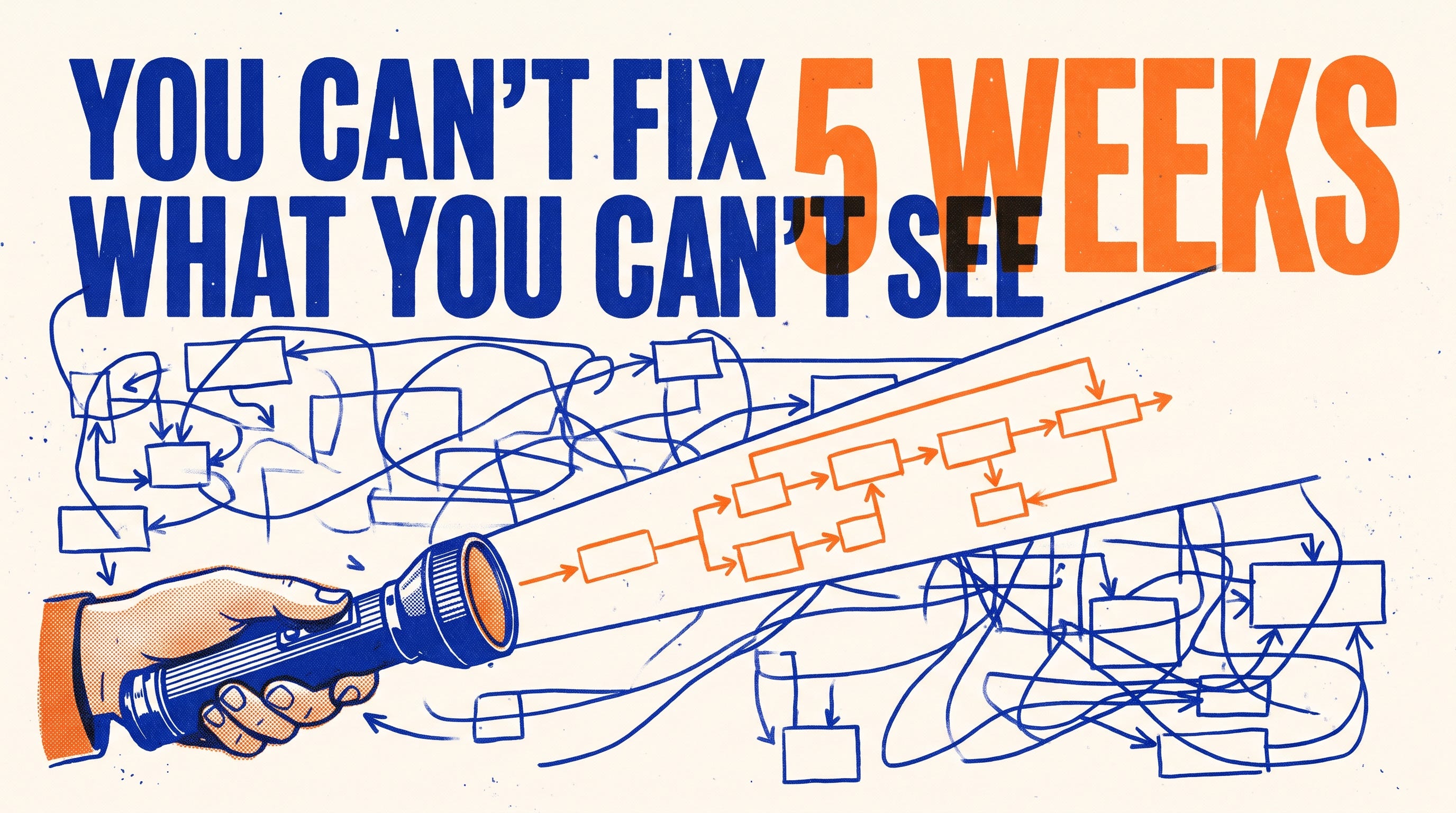
For one legal team, that means a case management system that has grown one grant and one compliance requirement at a time, with nobody ever given the time to map the whole workflow. For others it’s decades of records that were never organized to be searched - case data going back to the 1970s, more than a century of ledgers and community meeting records, 55 years of analog media. Someone has to digitize it, catalog it and clear the rights before AI can do anything useful with it. And every one of them was clear that the AI is there to support their staff.
Your before is what proves your after. Funders increasingly want numbers, and plenty of nonprofits struggle to give them. That’s rarely because the work didn’t land. It’s because nobody wrote down where things stood when it started. A baseline taken now is what turns next year’s results into evidence. Written down, it sounds obvious. In practice it runs against the instinct when funding arrives, which is to start building straight away.
Donors need to see their after too. The same logic applies to the people who fund you. Nonprofit email consultant Katelyn Baughan made the point in a recent workshop that most first-time donors never make a second gift (we dug into the numbers in You can’t blast your way out of a shrinking donor base). They haven’t stopped caring. Nobody showed them their gift mattered.
Her answer is a welcome series with one rule: five emails that ask for nothing, then one that does, each with a human touch like a thank-you from the founder. Swap “your support makes a difference” for one concrete moment, and say “you” far more than “we.” We’ve been working on a similar premise with our cohort one fundraising pilot (sign up for cohort 2 here).
That’s the case for relevance over volume. One concrete moment, matched to the donor who made it possible, beats the same thank-you sent to everyone - and that matching is the part AI makes possible at the size of a small team.
📝 Moves before GivingTuesday
Your comments this month were full of practical methods. These are the ones worth stealing, plus one of ours to start:
Write your baseline down this week. Second-gift rate, how long a thank-you takes to go out, how many lapsed donors you’ve contacted this year. Whatever you change in December, you’ll want to know what it changed from.
Use AI ahead of time, not just when you’re behind. One commenter is planning an agent that drafts fundraising campaigns months in advance and creates simple graphics, filling a capacity gap they can’t afford to staff year-round.
If you’re picking donors for a personal follow-up, pick who does the following up. Agree who gets the list, how many days they have, and who steps in if they can’t.
Decide what the saved time is for. If you don’t, it gets swallowed by more email and meetings, and the team concludes the AI didn’t work when it did.
What’s your next steps ahead of Giving Tuesday and the winter fundraising season? Let us know in the comments so we can all learn from one another or email hello@aifornonprofitsnetwork.org
🧪 From the peer group
At our OpenAI peer group session on October 1st, one contribution stuck with me. Barbara Raymond, a former funder at The California Endowment who now works with Hollywood 4WRD, said that if she were funding today, she would ask her grantees why they weren’t using AI, and she’d want a real reason. Her logic is that small organizations can now do so much more, and Hollywood 4WRD is proof of this.
The next peer group session is on December 3rd. Join a community of nonprofits just like you.
📡 Funding Radar
ROI’s funding toolkit. A practical collection of AI prompts, custom skills, and fundraising processes. Rural Opportunity Institute (ROI), a nonprofit in rural eastern North Carolina and a repeat grantee of OpenAI’s People-First AI Fund, has given us access to the toolkit behind its own funded applications. It has 13 tools in four groups:
Funder research: work out a funder’s ideal grantee, learn their talking points, and screen opportunities against your mission.
Proposal writing: load context before you draft, answer one question at a time, and edit a draft without breaking it.
Finance and reporting: explain your finances in plain language, find the red flags, and present them to funders.
General operations: draft quarterly goals and write a conference session proposal.
Each tool is a copy-and-paste prompt for any AI assistant, and also comes as an installable skill for ChatGPT or Claude. It’s free under a CC BY 4.0 license, so credit ROI, link back and note what you changed.
What I like most is the guardrails. ROI’s board-approved AI policy says no participant data enters an AI system, and a person reviews every output. One tool won’t draft anything until the human says so, and the drafting tool takes your own raw thinking and a word limit and returns a tight draft. It will be an appendix to the OpenAI peer group white paper, so try it out now.
🔎 Worth a look
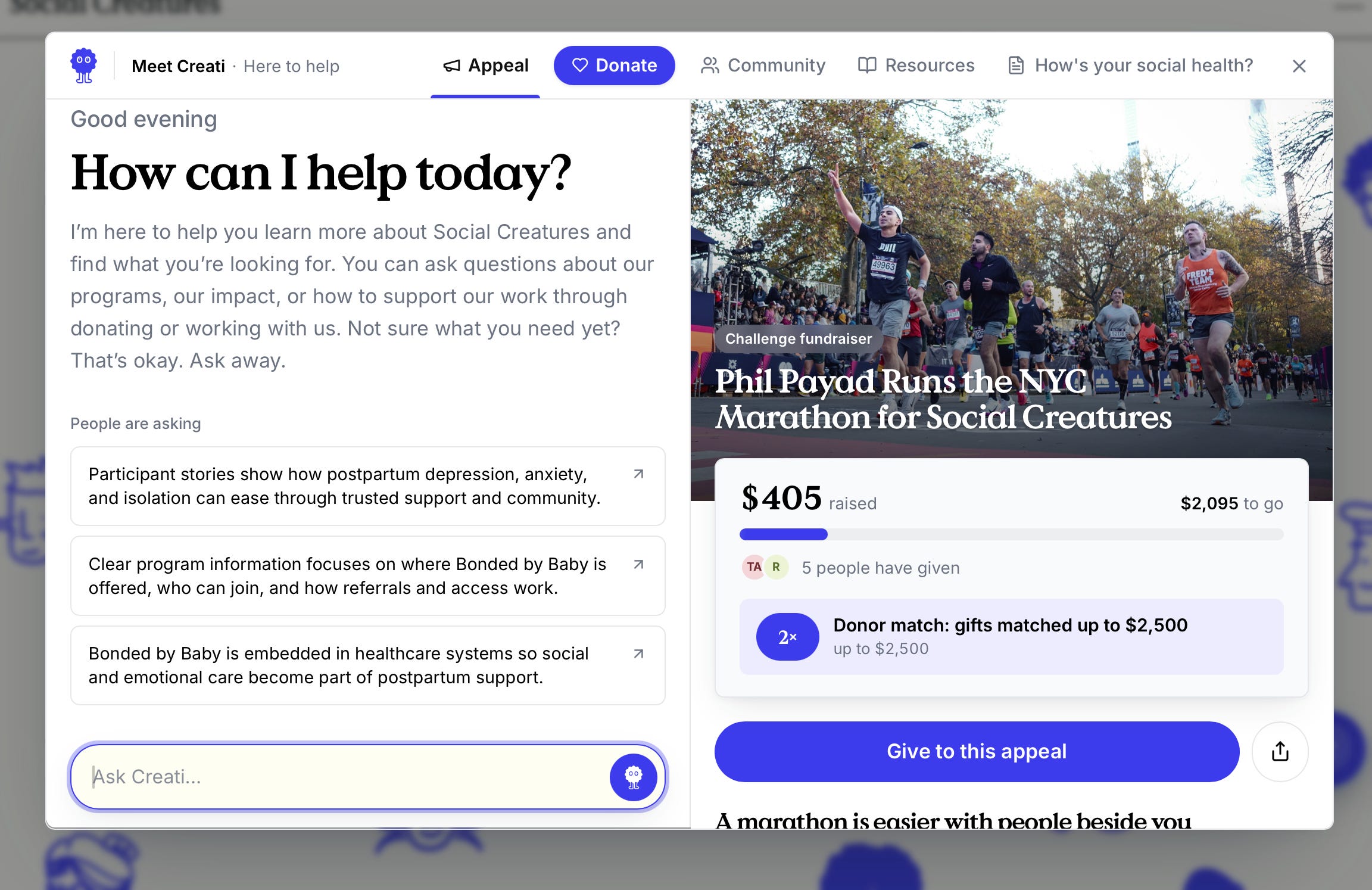
The New York Marathon will be taking place on November 1st, and this is always a great opportunity for donations. Its helpful to see how other organizations are making the most of it. A good example is Social Creatures, who have spotlighted the New York Marathon donation page on their chat agent, so anyone who goes use their chat agent will see it. This uses the momentum and national visibility of the marathon to bring in donations, without taking away from the chat agent and the rest of the site.
Your point about deciding how saved staff time will be used deserves more attention. “Hours saved” becomes meaningful when an organization can show what those hours made possible: faster assistance, more personal follow-up, or a manageable workload for staff.
This connects to our publication, From Exposure to Accountability, at The 99% Perspective. Accountability requires a starting point, a clearly assigned responsibility, and evidence that the intended benefit actually reached people.
For nonprofits, I’d want the baseline to include service quality and staff workload alongside fundraising or output measures. Otherwise, a tool could increase activity while leaving the underlying bottleneck untouched.
Would you encourage organizations to choose at least one outcome defined by the people they serve—and revisit it alongside staff time savings after implementation?