


The network is supported by Whitelabel.ai, an AI native fundraising platform. Clients include Livestrong, the Canadian Red Cross, Net Impact, and Hunger Free Colorado.
💭 Thought for the week:
Nonprofits rarely have just one audience. A chat agent lets everyone get to what they came for in one click. It sits on top of your own site, so people still come to one URL. Long gone are the days where a chat box simply answered questions at a slow pace or the ones who gave incorrect/ irrelevant answers.
Picture a food bank’s website at 4:30 p.m. One visitor wants to donate. Another needs their nearest collection point, fast. Both matter equally - and the job of a chat agent is to make each of those journeys as quick and seamless as possible.
There’s no one size fits all. That’s what stood out most when we looked at organizations using them well:

Livestrong uses its agent for cancer support, for both patients and their loved ones, at any time they need. Ellis has an app and website, and on the website over 40% of questions recently were about programs and services, so taking more of an FAQ role. On the app, conversations last a lot longer and are more personal in nature with about one-third being day to day support. Someone who’s just heard the word cancer, about themselves or someone they love, shouldn’t have to wade through pages of PDFs to find what applies to them. And that is exactly what Livestrong has worked to change.
Generation180 uses theirs to answer specific questions: the detailed, program-level queries that would otherwise land in someone’s inbox. It directs users to pages on their site for further information when needed.
Social Creatures has a multifaceted approach. The agent answers all questions in relation to their projects and programs, as well as having fundraising appeals, events, and community elements supported.
What they all share is trusted information. People get pointed to self-serve answers first. Each agent answers from the organization’s own vetted resources, then tailors that to the person asking - a newly diagnosed patient and a caregiver get different answers from the same library. And when someone needs a human, they’re handed over to one.
The evidence is thin and constantly changing. Most chat agent figures come from the companies that sell them - one vendor claims a 23% lift in conversion, with no method or sample size. What we do know is that supporters are already asking AI where to give. The Age of AI report found 4.5% of donors use tools like ChatGPT or Claude to research causes. It’s a small but rapidly growing share, but people are getting used to asking AI, so there’s no reason to shy away from it.
📚The bigger payoff is what you learn.
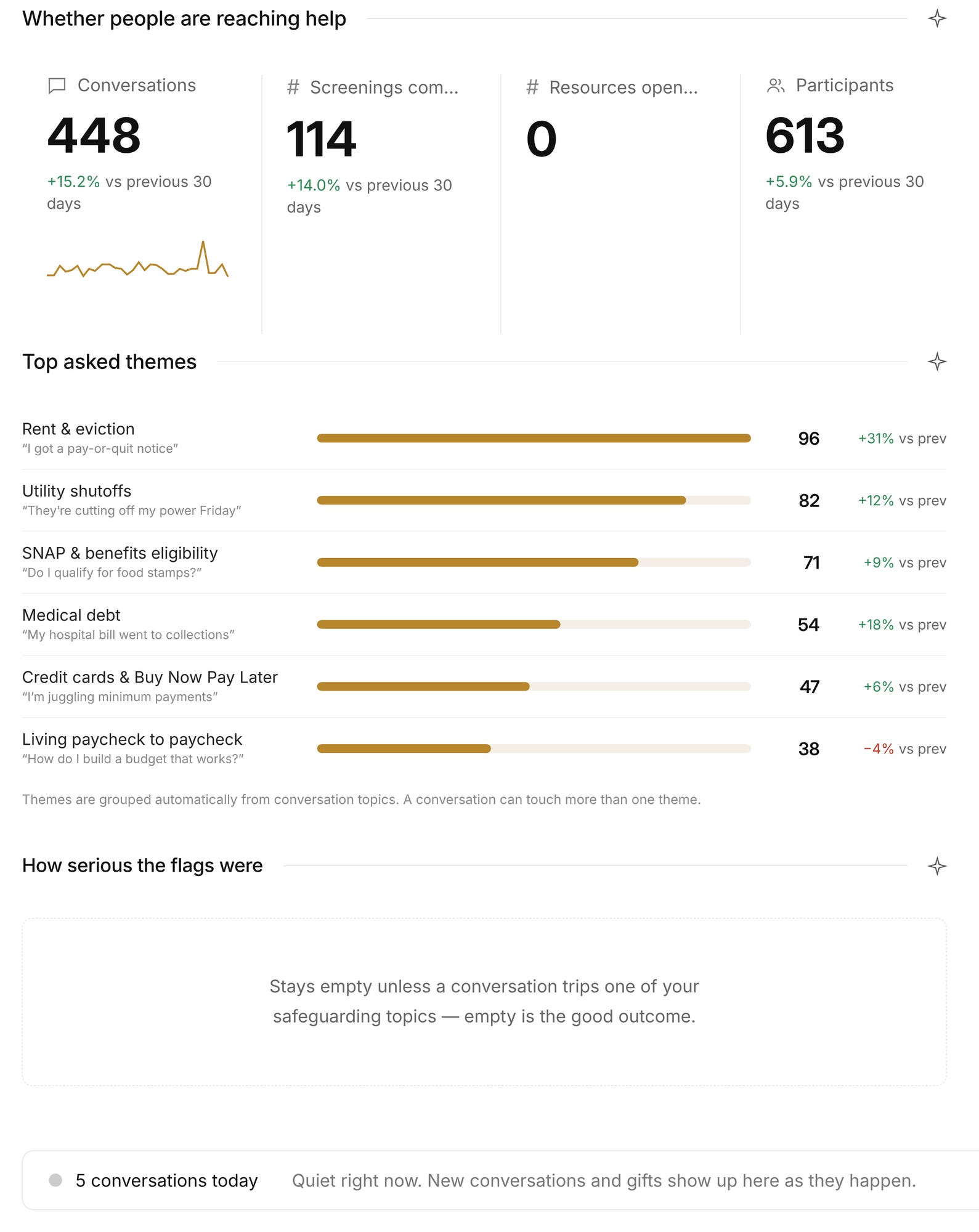
A chat agent is the best audience research tool most nonprofits have never had. It tracks the questions people ask, and those often point to gaps on your site or to your organization’s next steps.
Livestrong is the clearest example. Its chat showed there wasn’t enough information for children, and that gap is part of why it published My Brave Friend, a picture book with Hopecam that helps kids understand cancer.
It also builds a picture of each supporter. When the agent asks for an email, you know what that person asked and why they came. So the follow-up can be relevant from the first line. Chat agents have moved on from questions and answers - now they’re the start of a relationship.
Little evidence doesn’t mean little value. The value of a chat agent is mostly practical - though it can be financial too. It improves the experience of everyone who uses your site. Other organizations’ numbers won’t make this decision for you, so start from what your organization and your team need. Do you want to know more about the people who come to you?
We’re working on how this helps organizations personalize their communications. If you want to hear how other nonprofits have utilized this technology to improve outreach, join the next wave:
What you can do now: Test it first
Ask yourselves:
Who are you trying to serve?
How many clicks does it take each of them to reach what they came for?
Is that the same for every group?
Would knowing more about your visitors help your team?
Every supporter should reach what they need with the same ease. Where they don’t, a chat agent can help. And to get started, pull the questions your team answers most by email - that’s your agent’s first knowledge file.
If this is something you’re interested in sign up to Cohort Two’s waitlist.
🧪 Learning from the cohort
A chat agent is only as good as the information it’s given. That’s the main takeaway so far. The agents answer from material each nonprofit provides - a knowledge file or its own site - rather than the open internet. For organizations working on sensitive topics, those limits make it safer. Answers stay accurate and relevant, humans stay in control, and the agent adds to your site instead of replacing it.
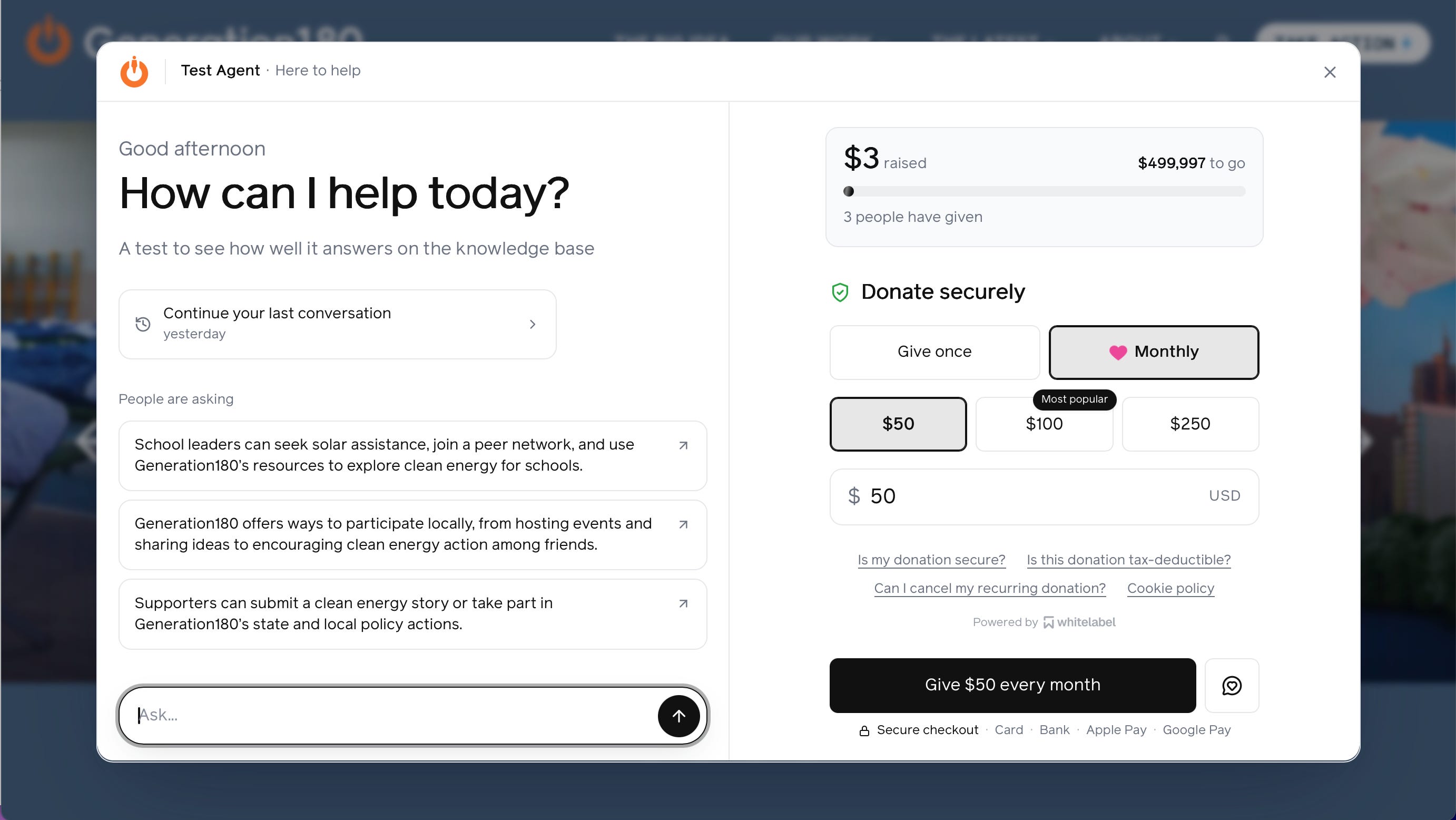
Working with the cohort means hands-on testing on real sites. Generation180 recently trialed its agent. Answers were fast and mostly solid, and staff liked that it remembered returning visitors. But it asked for email addresses earlier than they’d like and sometimes leaned on old content. The first version should never be the final one - test it, check it fits your vision, and keep tailoring it until it does.
Curious? Join the Cohort 2 waitlist.
Already running a chat agent? Comment and tell us the question your supporters ask most - with your permission, we’ll share the best ones in a future issue.
🗞️ News this week
Humanity AI open call: $10 million for community-led work. Grants run from $75,000 to $1 million for US-based organizations shaping how AI is built, governed and used. Lead applicants must be registered nonprofit organizations (501©(3)) and the themes are education, labor, the economy, humanities, arts and culture. Initial applications are due by 4:59 p.m. PT on 21 October 2026.
Anthropic gives outside evaluators inside access. Six staff from METR, a nonprofit AI evaluator, now work inside Anthropic with access close to its own risk teams. METR can publish what it finds without an Anthropic veto, although Anthropic can require redactions in narrow categories. However, this is voluntary and no report has been published yet. This links back to the recent article we published about Anthropics’ recent internal investigation and shows they are acting on their conclusions. This is a positive step for AI.
One easy routine: once a month, pull every question the agent couldn't answer or handed to a person, and sort them by program. That list becomes a to-do list for the website and for program staff, built from logs you already have. Stripping names and case details before staff review the list keeps it workable for sensitive services.